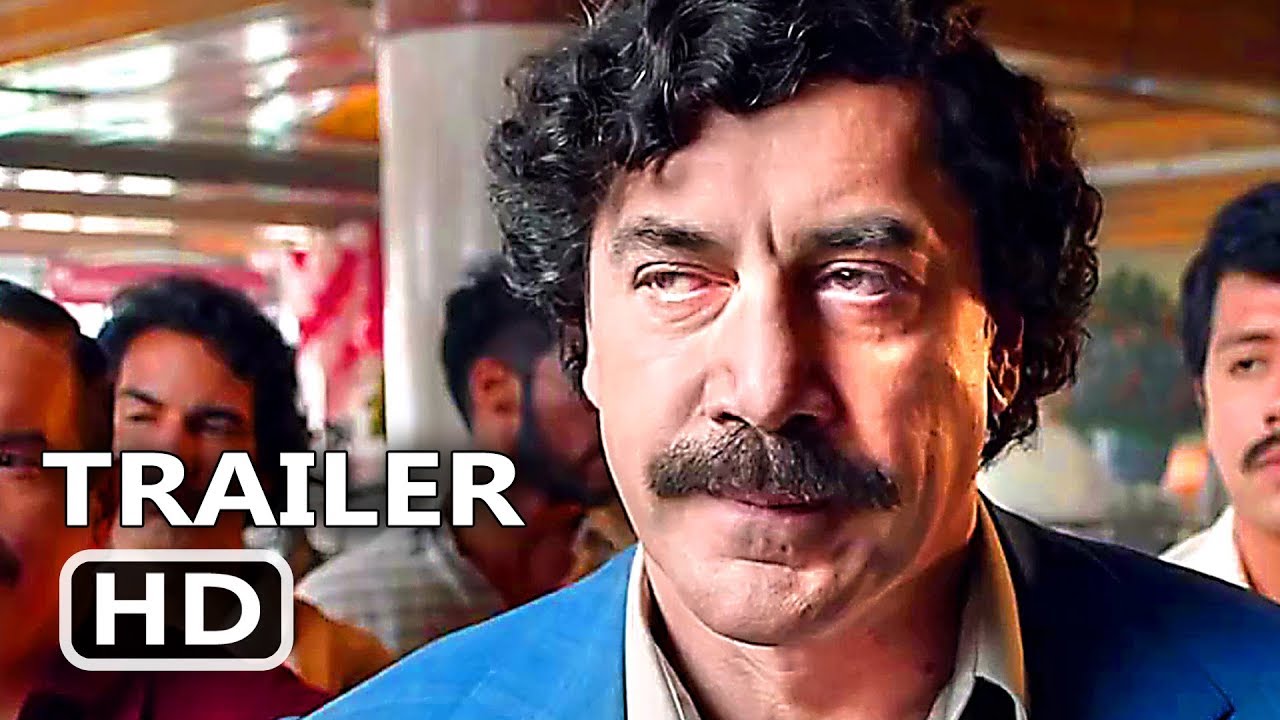
The cinematic portrayal of Pablo Escobar, the infamous Colombian drug lord, has captivated global audiences for decades. From gritty biopics to sprawling television series, the "Pablo Escobar film" genre, broadly defined, explores the rise and fall of one of history's most notorious criminals. This article delves into the complex landscape of these adaptations, examining their appeal, their challenges, and the lasting impact they have on our understanding of a dark chapter in history.
Editor's Note: Published on May 15, 2024
The Cinematic Legacy of the Medelln Cartel Boss
The fascination with Pablo Escobar transcends mere historical interest; it's a deep dive into the psychology of power, corruption, and the human cost of ambition. Movies about Pablo Escobar often grapple with the duality of his persona: a ruthless murderer responsible for countless deaths, yet also a complex figure who built schools and homes for the poor. This inherent contradiction provides fertile ground for storytellers, enabling them to craft narratives that are both thrilling and morally ambiguous. From major Hollywood productions to independent features and documentaries, each take attempts to peel back layers of myth surrounding the Medelln cartel leader.
The challenge for any director tackling the story of Pablo Escobar is immense. How does one accurately depict the scale of his terror without glorifying his actions? How do actors embody such a monstrous yet charismatic figure without turning him into an anti-hero? These are crucial questions that inform the creative decisions behind every Pablo Escobar film project. Audiences are not merely seeking entertainment; they often seek a deeper understanding of the events that shaped Colombia and the broader global drug trade.
Key Insights into Escobar's Screen Portrayals
Analyzing the various screen adaptations reveals recurring thematic elements and distinct approaches. Some productions prioritize historical accuracy, meticulously recreating events and conversations, while others lean into dramatic license for greater narrative impact. The best Pablo Escobar documentaries, for instance, often feature interviews with those directly affected by his reign, offering raw, unfiltered perspectives that dramatizations sometimes struggle to capture. Conversely, a well-crafted drama can provide emotional depth and character development that helps contextualize his actions, even if it takes liberties with minute details.
pablo escobar film
The examination of "pablo escobar film" necessitates an understanding of its multifaceted nature as a subject within cinematic arts. This exploration focuses on fundamental dimensions that define and distinguish these productions, offering insight into their construction and reception.
- Genre diversity
- Actor interpretations
- Historical fidelity
- Narrative styles
- Global impact
Genre diversity encompasses biopics, documentaries, and fictionalized dramas, each offering distinct perspectives on Escobar's life. Actor interpretations critically shape audience perception, varying from sympathetic portrayals to overtly monstrous depictions. Historical fidelity dictates the educational value, often contrasting with dramatic license employed for narrative effect. Narrative styles range from linear chronologies to non-linear explorations, influencing audience engagement. The global impact reflects both cultural fascination and ethical considerations surrounding the portrayal of a controversial figure.
Genre diversity
The extensive and often contradictory facets of Pablo Escobar's lifeencompassing extreme violence, populist philanthropy, sophisticated criminal enterprise, and profound personal relationshipsnecessitate a broad spectrum of cinematic genres for comprehensive portrayal. This inherent complexity serves as the primary cause for the significant genre diversity observed within "pablo escobar film" productions. The importance of this diversity lies in its capacity to dissect different dimensions of his narrative. A straightforward biopic, for instance, might trace his chronological ascent and downfall, while a serialized drama can explore the broader geopolitical implications and the lives of those around him with greater depth. Documentaries, conversely, often prioritize factual accuracy and direct testimonies, offering an unvarnished historical record.
Real-life examples powerfully illustrate this connection. Narcos, as a dramatic television series, utilized an expansive, multi-season format to delve into the intricate web of political maneuvering, law enforcement efforts, and the cartel's operations, thereby offering a wide-angle view of the drug trade's impact. In contrast, films like Loving Pablo or Escobar: Paradise Lost function as more contained biopics, often focusing on specific relationships or periods, allowing for intense character studies. Documentaries such as Sins of My Father provide intimate, first-person accounts from family members, shifting the narrative focus from grand criminal exploits to personal legacy and remorse. This practical significance ensures that audiences with varied interestswhether seeking historical detail, thrilling drama, or psychological insightcan find a "pablo escobar film" tailored to their preferences, preventing a monolithic interpretation of his controversial existence.
Ultimately, genre diversity is not merely an incidental characteristic but a fundamental component in the ongoing cinematic engagement with Pablo Escobar. It enables the exploration of his story through multiple lenses, addressing the challenges inherent in depicting such a polarizing figure without succumbing to simplistic hero-worship or demonization. By allowing for factual accounts, fictionalized narratives, and personal reflections, this multi-genre approach collectively contributes to a more nuanced, albeit still debated, understanding of Escobar's place in history and his enduring impact on popular culture.
Actor interpretations
The profound complexity of Pablo Escobar's persona, characterized by a brutal ruthlessness juxtaposed with a peculiar populist appeal and familial devotion, necessitates highly nuanced portrayals in any "pablo escobar film." This inherent multifaceted nature serves as the primary cause for the critical importance of actor interpretations. An actor's embodiment of Escobar directly dictates the audience's perception of the character, influencing whether he is viewed predominantly as a monstrous criminal, a charismatic anti-hero, or a tragic figure of immense power. The interpretive choices made by performers are not mere stylistic preferences; they are fundamental components that shape the narrative's moral stance and its engagement with historical accuracy. For instance, Wagner Moura's acclaimed performance in Narcos captured a blend of magnetic charm and terrifying menace, allowing the series to explore both the allure and the horror of Escobar's reign. Conversely, Javier Bardem's portrayal in Loving Pablo leaned heavily into the character's brutality and obsessive control, anchoring a narrative focused on the destructive aspects of his power. The practical significance of these varied interpretations lies in their capacity to explore different facets of Escobar's legacy, preventing a monolithic representation and allowing each "pablo escobar film" to contribute a distinct analytical or emotional perspective.
Further analysis reveals that the success of a "pablo escobar film" often hinges on an actor's ability to navigate these intrinsic contradictions without descending into caricature or overt glorification. This demands meticulous research into Escobar's historical record, coupled with significant physical and psychological transformations. Performers frequently undertake extensive study of his speech patterns, body language, and the socio-political context of his era to imbue their roles with authenticity. Benicio del Toro's take in Escobar: Paradise Lost, for example, presented a more enigmatic and almost mythic figure, emphasizing the psychological toll of his empire on those around him. Such deep immersion allows actors to transcend a simple depiction of criminality, instead presenting a more complete, albeit still morally reprehensible, human being. For filmmakers, the selection of an actor capable of such depth is a paramount decision, directly influencing the thematic direction and overall impact of the production. For audiences, an understanding of these diverse interpretations enriches the viewing experience, facilitating a comparative analysis of how Escobar's complex narrative is constructed and conveyed across various cinematic and television platforms.
In conclusion, actor interpretations are foundational to the identity and message of any "pablo escobar film." They serve as critical narrative lenses through which the historical figure is presented, influencing audience empathy, condemnation, and understanding. A significant challenge inherent in these portrayals is the ethical tightrope walk required to depict a figure responsible for immense suffering without inadvertently romanticizing his actions. An effective performance must ensure that any depiction of charisma or familial affection does not overshadow the devastating human cost of his empire. Ultimately, the efficacy of an actor's portrayal directly impacts the "pablo escobar film" genre's ability to contribute meaningfully to broader discussions about true crime, historical representation, and the moral complexities inherent in depicting figures of extreme power and violence. This underscores the profound influence of performance in shaping collective memory and public perception of historical figures.
Historical fidelity
The depiction of Pablo Escobar's life and reign of terror in various cinematic and television productions is inextricably linked to the concept of historical fidelity. This connection is paramount due to the real-world consequences of Escobar's actions, which profoundly impacted a nation and countless individuals. The importance of historical fidelity as a component of "pablo escobar film" stems from a dual imperative: to accurately inform audiences about a significant historical period and to avoid the inadvertent glorification of a figure responsible for immense suffering. Deviation from established facts risks misrepresenting the historical narrative, thereby shaping public perception of a complex and tragic chapter. For instance, productions like Narcos frequently incorporated archival footage and news clips, alongside a narrative voice-over, to underscore the factual basis of the unfolding drama, aiming to ground the fictionalized elements in documented reality. This approach serves to contextualize the violence and corruption, presenting them not as mere dramatic devices but as grim historical truths. The practical significance of this commitment to accuracy lies in its ability to lend credibility to the portrayal, fostering a deeper, more responsible engagement with the subject matter.
Further analysis reveals a persistent tension between the demands of historical fidelity and the necessities of dramatic storytelling. While a "pablo escobar film" aims to entertain, its subject matter often carries a moral obligation to respect the historical record. This tension frequently manifests in debates surrounding the dramatization of specific events, the merging of multiple historical figures into composite characters, or the creation of fictional subplots to enhance narrative cohesion. The challenge for filmmakers lies in navigating this delicate balance, ensuring that any artistic liberties taken do not fundamentally distort the historical truth or diminish the gravity of Escobar's crimes. For example, some films have faced scrutiny for potentially romanticizing Escobar's relationships or for downplaying the widespread terror he inflicted, leading to criticism regarding their ethical responsibility. The practical application of this understanding involves critical evaluation by audiences and scholars alike, who assess how effectively a production manages to tell a compelling story while upholding its duty to historical accuracy, thereby influencing a film's lasting legacy and its contribution to collective memory.
In conclusion, historical fidelity constitutes a fundamental pillar for any credible "pablo escobar film." Its pursuit is crucial for providing an accurate and responsible representation of a figure whose legacy remains deeply controversial. While absolute fidelity can be elusive in dramatized formats, the conscientious effort to adhere to known facts and the spirit of the historical period elevates these productions beyond mere entertainment. This commitment ensures that the narratives contribute meaningfully to an understanding of the profound impact of the drug trade and the complexities of historical evil, rather than reducing them to simplistic or sensationalized accounts. The sustained engagement with Escobar's story through film, therefore, carries a significant responsibility to inform and educate, rather than merely to enthrall.
Narrative styles
The portrayal of Pablo Escobar across various cinematic and television productions is profoundly influenced by the narrative styles employed, dictating how audiences perceive his story, his character, and the broader impact of his actions. The choice of narrative structure is not merely an artistic preference but a critical decision that shapes thematic emphasis, emotional engagement, and the ethical presentation of a highly controversial historical figure. Different narrative approaches allow for distinct explorations of Escobar's life, from his brutal rise to his eventual downfall, each offering unique insights into the complexities of his empire and the societal upheaval it caused.
- Linear Chronological Narratives
This narrative style presents Escobar's life events in a straightforward, temporal sequence, typically beginning with his origins and progressing through his criminal career to its conclusion. Its role is to provide a clear, easy-to-follow historical progression, allowing audiences to understand the cause-and-effect relationships within his story. Examples include biographical films that track his journey from humble beginnings to drug kingpin, such as elements within Loving Pablo or Escobar: Paradise Lost, which focus on specific periods or relationships within a chronological framework. The implication of this style is often a heightened sense of historical recounting, enabling a direct understanding of his evolution and the escalating scale of his violence, albeit sometimes at the expense of deeper psychological exploration or broader contextualization.
- Multi-Perspective or Ensemble Narratives
This approach expands the narrative beyond Escobar's singular viewpoint, incorporating the perspectives of law enforcement, political figures, victims, family members, and even rival cartel members. Its role is to illustrate the widespread impact of his reign, showcasing the intricate web of individuals and institutions affected by the drug trade. The most prominent example is the television series Narcos, which extensively utilized multiple viewpoints, including a consistent DEA agent narration, to present a comprehensive, almost journalistic account. This style effectively communicates the societal ramifications of Escobar's actions, moving beyond a simple character study to a broader examination of a historical period, fostering a more nuanced understanding of the conflict and its human cost.
- Thematic or Character-Driven Narratives
This style prioritizes the exploration of specific themes or the psychological depth of characters, sometimes employing non-chronological elements or focusing intensely on particular relationships or internal conflicts. Its role is to delve into the motivations, contradictions, and personal consequences surrounding Escobar, rather than merely documenting events. Films that focus on Escobar's relationships, such as Loving Pablo (exploring his affair with Virginia Vallejo), exemplify this, using the relationship as a lens through which to examine his character. The implication is often a more intimate, psychological portrayal that seeks to understand the man behind the myth, potentially revealing the paradoxes of his nature, though this approach carries the risk of inadvertently humanizing or even romanticizing aspects of his persona.
- Docu-Drama and Hybrid Narratives
This style blends factual elements, such as archival footage, real news reports, or documentary-style narration, with dramatized scenes and fictionalized dialogue. Its role is to enhance historical credibility and immersion, bridging the gap between pure documentary and pure fiction. Narcos again serves as a prime example, interspersing its dramatic narrative with actual historical footage and a factual voice-over. This hybrid approach seeks to ground the dramatic portrayal in verifiable reality, offering a powerful combination of entertainment and historical education. The implication is a heightened sense of authenticity, allowing productions to convey the gravity of historical events while maintaining the engaging qualities of dramatic storytelling, thereby aiming for both informative and compelling content.
The judicious selection of narrative style is therefore a foundational aspect of any "pablo escobar film," profoundly influencing how his story resonates with audiences and contributes to the ongoing public discourse surrounding his legacy. Each approach offers distinct advantages and presents unique challenges, collectively creating a rich tapestry of interpretations that continues to shape the understanding of one of history's most infamous figures. The diversity in these narrative choices underscores the complex nature of Escobar's life and the ongoing efforts to grapple with its cinematic representation.
Global impact
The extensive proliferation of "pablo escobar film" productions across global media platforms has generated a significant and multifaceted international impact. This connection is fundamental; the narrative of Pablo Escobar, encompassing themes of immense power, corruption, violence, and the international drug trade, inherently possesses universal resonance. The global distribution of these cinematic and television projects, particularly through streaming services, serves as the primary cause for their widespread influence. This phenomenon leads to a renewed, often intense, global interest in Colombian history, the dynamics of narco-trafficking, and the ethical considerations surrounding the portrayal of such figures. The importance of "Global impact" as a component of "pablo escobar film" lies in its capacity to shape international perceptions of Colombia and its past, influence cultural discourse, and contribute to a collective, albeit often contested, understanding of recent history. For instance, the Netflix series Narcos became a global sensation, reaching audiences in over 190 countries and sparking widespread discussions, inquiries, and even tourism related to Escobar's life. This widespread access underscores the practical significance of understanding the global ramifications, as it informs how these narratives are consumed, interpreted, and potentially misconstrued across diverse cultural contexts.
Further analysis reveals that the global impact extends beyond mere viewership numbers, encompassing both positive and challenging outcomes. On one hand, these films and series have undeniably raised international awareness about the devastating effects of the drug war on Colombia and other nations, prompting dialogue about drug policy, socioeconomic disparities, and the vulnerabilities of political systems. They have also contributed to Colombia's cultural export, showcasing its talent and production capabilities. On the other hand, a persistent challenge associated with this global reach involves the potential for perpetuating stereotypes or inadvertently romanticizing a figure responsible for immense human suffering. Audiences unfamiliar with the historical context might form impressions solely based on dramatized accounts, potentially overshadowing the memory of countless victims. The global impact also manifests in economic ways, influencing tourism flows and generating significant revenue for the entertainment industry. A critical understanding of these dynamics is therefore essential for both creators and consumers, necessitating a conscious effort to engage with these narratives responsibly, recognizing their power to shape international perspectives.
In conclusion, the global impact constitutes an indispensable dimension of any "pablo escobar film." It highlights the profound influence of media in shaping collective memory and international perception, particularly concerning complex historical figures. The ongoing creation and worldwide consumption of these productions demonstrate an enduring fascination with the themes of power, crime, and justice, transcending geographical boundaries. However, this global reach also imposes a significant ethical burden: the responsibility to present a nuanced, historically informed narrative that avoids glorification and acknowledges the profound human cost. The challenges inherent in balancing commercial appeal with historical accuracy and cultural sensitivity remain central to the discourse surrounding these globally distributed cinematic interpretations of Pablo Escobar's notorious legacy.